
V4 emergency preparedness exercise
Updated 27. September 2026
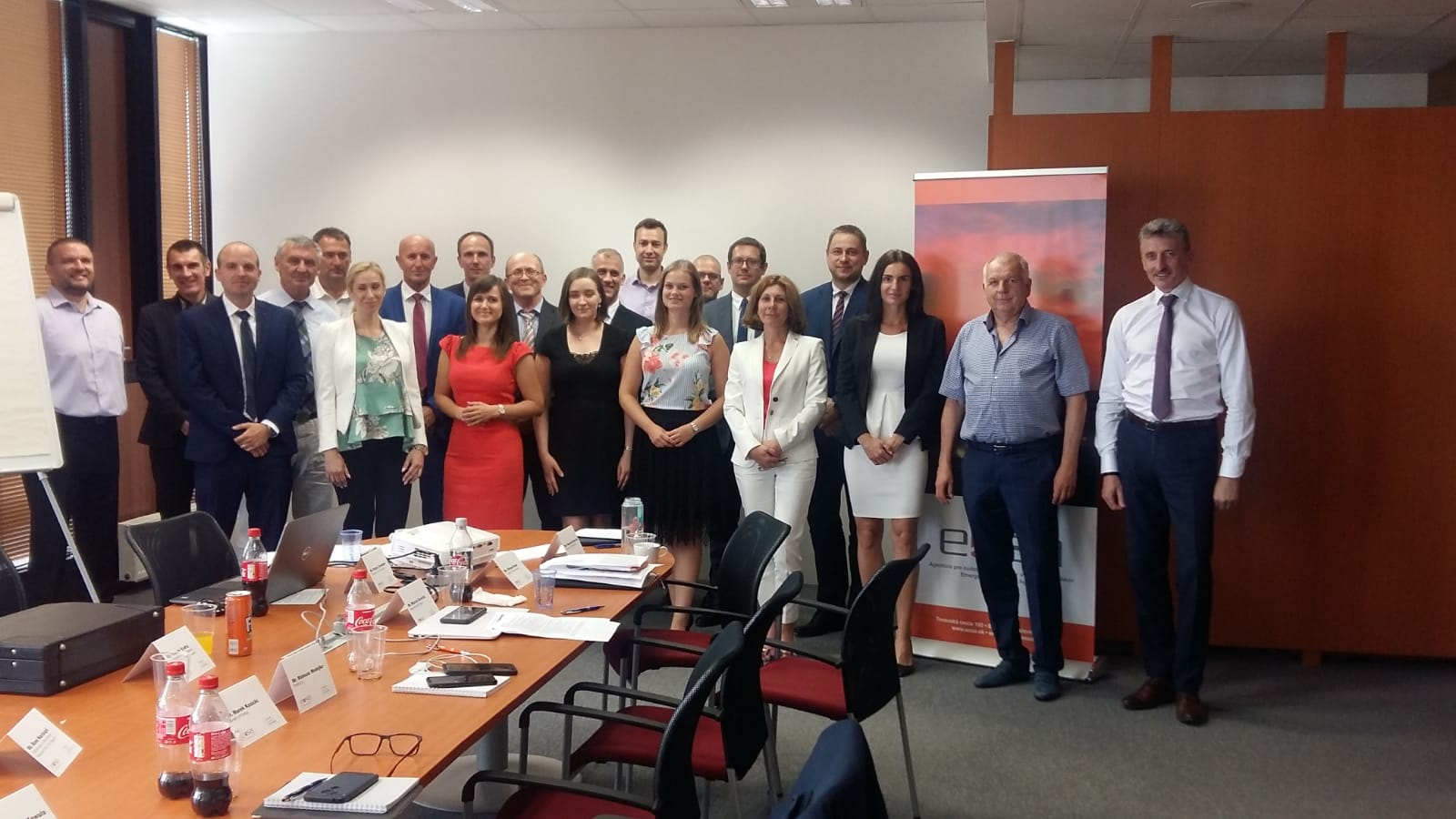
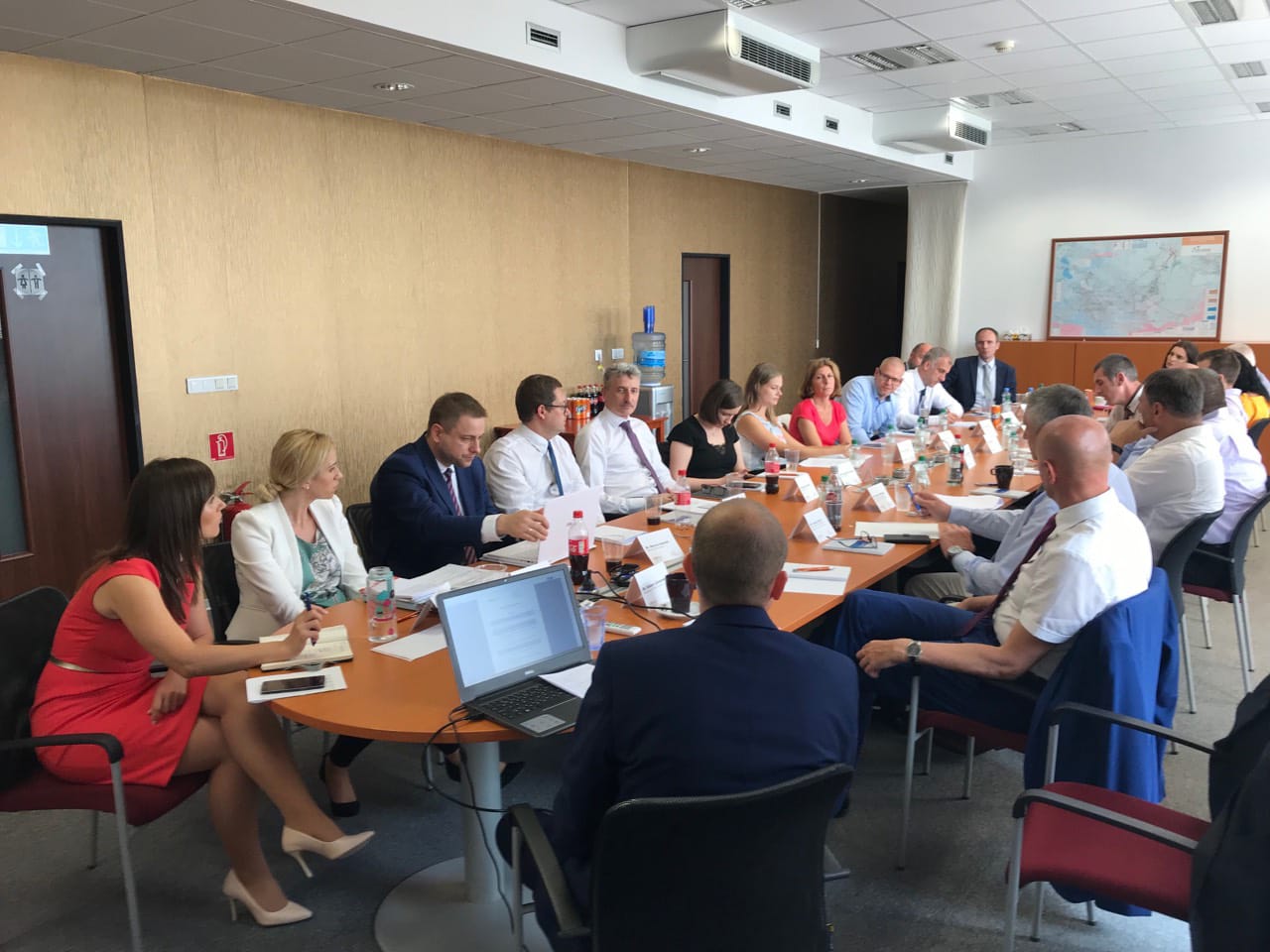
On 19 June 2019, a joint emergency preparedness exercise in the area of oil security of the V4 countries took place in Bratislava. The exercise was organised, within the official programme of the Presidency of the Slovak Republic in the Visegrad Group, by the Agency for Emergency Oil Stocks, which maintains emergency stocks of oil and petroleum products for their use in the event of an oil crisis in order to ensure the energy security of Slovakia. The exercise was attended by representatives of the relevant entities from the Czech Republic, Hungary, Poland and Slovakia. On behalf of Slovakia, in addition to the representatives of the Agency, experts from the Administration of State Material Reserves of the Slovak Republic, the Ministry of Economy of the Slovak Republic, Transpetrol and Slovnaft took part.
The tradition of joint emergency preparedness exercises of the V4 countries was begun in 2018 by Hungary. At the first exercise, which took place in March 2018 in Budapest, hypothetical scenarios of a significant restriction, or a complete interruption, of oil supplies through the Druzhba pipeline were addressed jointly and joint proposals for solutions to bridge interruptions in oil supplies and the associated shortage of fuels in the V4 countries were prepared. The outcome of the resolution of both scenarios was a proposal to use alternative routes for the transport of oil – the Adria pipeline, which leads from the Adriatic Sea all the way to Slovakia, and the IKL pipeline from Germany to the Czech Republic, including the determination of the share in which the individual V4 countries would participate in the alternative oil supplies. For the practical usability of the alternative route through the Adria pipeline for the needs of Slovakia, it is necessary to resolve questions of a qualitative as well as a quantitative nature, since Slovakia is only the last purchaser of oil on the route of the Adria pipeline and the company Slovnaft, a.s. as the sole processor of oil in Slovakia must resolve the technical possibility of using oil other than the Russian REBCO oil, for the processing of which Slovnaft was originally built.
In view of the oil crisis caused by the interruption of oil supplies through the Druzhba pipeline owing to its contamination in the pipeline in April and May of this year, the existential necessity of a joint approach of the V4 countries in addressing potential interruptions in oil supplies through the Druzhba pipeline also to the territory of Slovakia, which is one hundred per cent dependent on them, became apparent. In a relatively short time, the V4 countries were forced to move from resolving hypothetical scenarios to resolving real problems in the supply of one of the currently most important energy carriers. Real practice showed the vulnerability of the entire oil supply process, where, owing to a technical failure or to the failure of the human factor, the functionality of the whole system can very easily be jeopardised. Further risks also include the possibilities of a terrorist attack, natural disasters and the like. All this further highlights the need for close cooperation of the V4 countries in this area and the need for permanent preparedness to address potential crises.
The main aim of this year’s emergency preparedness exercise was the application of the experience of the individual V4 states with addressing the recent crisis in oil supplies into joint implementation procedures for averting potential further crises, or for addressing their consequences. The task of the exercise was to prepare procedures and variants of a joint solution to potential further interruptions in the supply of oil and petroleum products as raw materials vital for ensuring the functioning of the state.
The interruption of oil supplies to the territory of Slovakia lasted from 25 April to 22 May 2019 and was a “live” test of the preparedness of the relevant authorities and organisations of Slovakia for addressing crisis situations and for ensuring energy security. Through the joint effort of the entities involved, it was possible to manage the entire situation without any negative impact on the energy security of Slovakia and on the supply of fuels to the Slovak market, without any negative response arising among the population with the risk of an outbreak of panic and of a “run” on filling stations. The Agency for Emergency Oil Stocks, in cooperation in particular with the Administration of State Material Reserves of the Slovak Republic as the guarantor of emergency stocks, the state oil transporter Transpetrol, a.s. and the Slovnaft, a.s. refinery as the sole producer of fuels in Slovakia, managed the crisis situation in oil supply at a high professional level in technical, time, coordination and communication terms, and the public did not feel any problems on account of the suspension of oil supplies to Slovakia. In this tense situation, when operational decisions to ensure the continuity of fuel supplies to the sales network were taken jointly day after day, the importance and role of emergency stocks, which are intended to serve precisely for addressing similar crisis situations, became apparent. The basic condition for the use of emergency stocks is, however, the correct coordination and full functionality of all those involved, from the transport of oil, through its processing into petroleum products, to the correct functioning of the logistics chain in the area of supplies to filling stations.
In addition to its benefit in developing cooperation and in jointly addressing practical problems, the joint exercise of the V4 countries also confirmed the need for more significant cooperation on the possibilities of interconnecting the systems of oil pipelines and product pipelines. A warning signal for the V4 countries is the fact that the International Energy Agency (IEA) considers a similar interruption of oil supplies for the V4 countries to be only a local crisis and does not activate collective action to assist the affected states.

V4 emergency preparedness exercise
Updated 27. September 2026